



.png?h=400&iar=0&w=1600&hash=85C131391EEFEE5ACED37695DFD6B02C)




ADDRESSING MOSQUITO CONTROL MISINFORMATION

Dr. Dana Price, associate research professor of entomology at Rutgers University, discusses how mosquito abatement districts can combat growing public misconceptions about vector-bourne diseases.
-
How has misinformation shaped public understanding of specific mosquito-borne diseases such as West Nile virus, Eastern equine encephalitis (EEE), and dengue, and what are the real risks associated with each?
I think that misinformation – at least in our corner of the Northeastern United States, often distorts the perception of certain mosquito-borne diseases to emphasize rare and dangerous outcomes while often ignoring the fact that risk can be highly localized (so answering the second half of this question is generally difficult if not impossible), and that we do have reasonably good ability to detect and respond to severe threats. A classic example would be Florida’s mosquito control efforts in Miami-Dade during the 2016 Zika outbreak that were quite effective in reducing mosquitoes and controlling the spread of the viruses in hot zones. Nearly everyone interacts with mosquitoes at some point or another and due to that, I think that people are hyper-sensitized to sensationalistic headlines.
-
Are there mosquito-borne diseases where public fear is disproportionate to actual risk, versus others like West Nile or EEE where risk is often underestimated? Why does that imbalance persist?
West Nile virus has been part of the “mainstream” lexicon since it arrived in 1999, and because it has been endemic for such a long period, I do not think that the headlines hold as much weight as they used to. Headlines tend to stay focused on whether it is going to be a “bad mosquito year” for much of the Spring, which leads to public mosquito fatigue by the late summer, when epizootic disease tends to be at its peak. You could use EEE as a case for disproportionate reaction in both directions; it is largely restricted to a specific habitat and geography, and has a very low probability of infection, yet can result in severe disease for those that are present in that habitat. The “one size fits all” messaging is often too extreme for those that are not at risk, yet often too vague for those that are.
-
What are the most common myths you encounter about how mosquito-borne diseases are transmitted, and how do those misconceptions interfere with effective disease prevention?
I really don’t have much experience with this. I would say that for me, this comes in the form of social media; particularly things like residential Facebook groups where folks very often complain of nuisance mosquitoes (that are unlikely to spread disease) and share recommendations for residential pest control companies that are unlikely to have any short- or long-term effect (on mosquito-borne disease risk) despite significant insecticide use.
-
When mosquito surveillance detects a pathogen before human cases appear, how should that disease risk be communicated so the public understands the significance without unnecessary alarm?
First, detection of a pathogen before human cases appear should be framed and reported as a good thing. That means that surveillance works and is doing its job. Second, people need to know, and feel, like they can do something to protect themselves rather than face some inevitable or unavoidable disease threat. Exactly what that “something” is depends on the pathogen and environment, but it needs to be front and center in public messaging.
-
How do disease trends such as changes in case severity, geographic spread, or seasonality affect how public health professionals should talk about mosquito-borne diseases each year?
Epidemiology is a bit like climatology in that hindsight is always 20/20 and I think that prefacing any public statements about mosquito-borne diseases should sound a bit more like weather forecasting, with the lead-in being the actual evidence used to build the statements. After that, pointed statements that address the real and current risk perception, rather than a blanket statement, create a dynamic messaging system. The public needs to understand that vector-borne disease risk can change very quickly and that the messaging can and will change with it.
-
As climate change expands the range of disease-carrying mosquitoes, which mosquito-borne diseases should communities in the U.S. be paying closer attention to, and how should messaging reflect that evolving risk?
The answer to this depends heavily on the when and where – really, I think, the answer is “all of them”.
West Nile virus is endemic nationwide and responsible for the greatest disease burden, and transmission seasons are starting earlier and lasting longer. Late-season prevention will likely come to dominate messaging here.
EEE is rare but serious. The public should understand the ecological drivers and whether (or not) they are at risk.
Dengue carries a bit of a different message because it is shifting from imported to locally acquired. Given the Aedes vectors, the public would do well to understand the local propensities for day biting and local prevention. The same goes for Chikungunya, while Zika dictates constant messaging to pregnant and at-risk populations, with the addendum that we have successfully controlled the vectors in the past.
There are many other emerging mosquito-borne diseases (Jamestown, Cache Valley, St. Louis encephalitis) that I think would be excellent case studies to communicate the fact that we still don’t know all there is to know about mosquito-borne disease, and that continued funding and research are necessary.
As far as messaging reflecting evolving risk, I would refer to my answer to question 5 above.
Integrated Pest Management
Overview: Part 4
Mosquito Adulticiding in the Modern Era
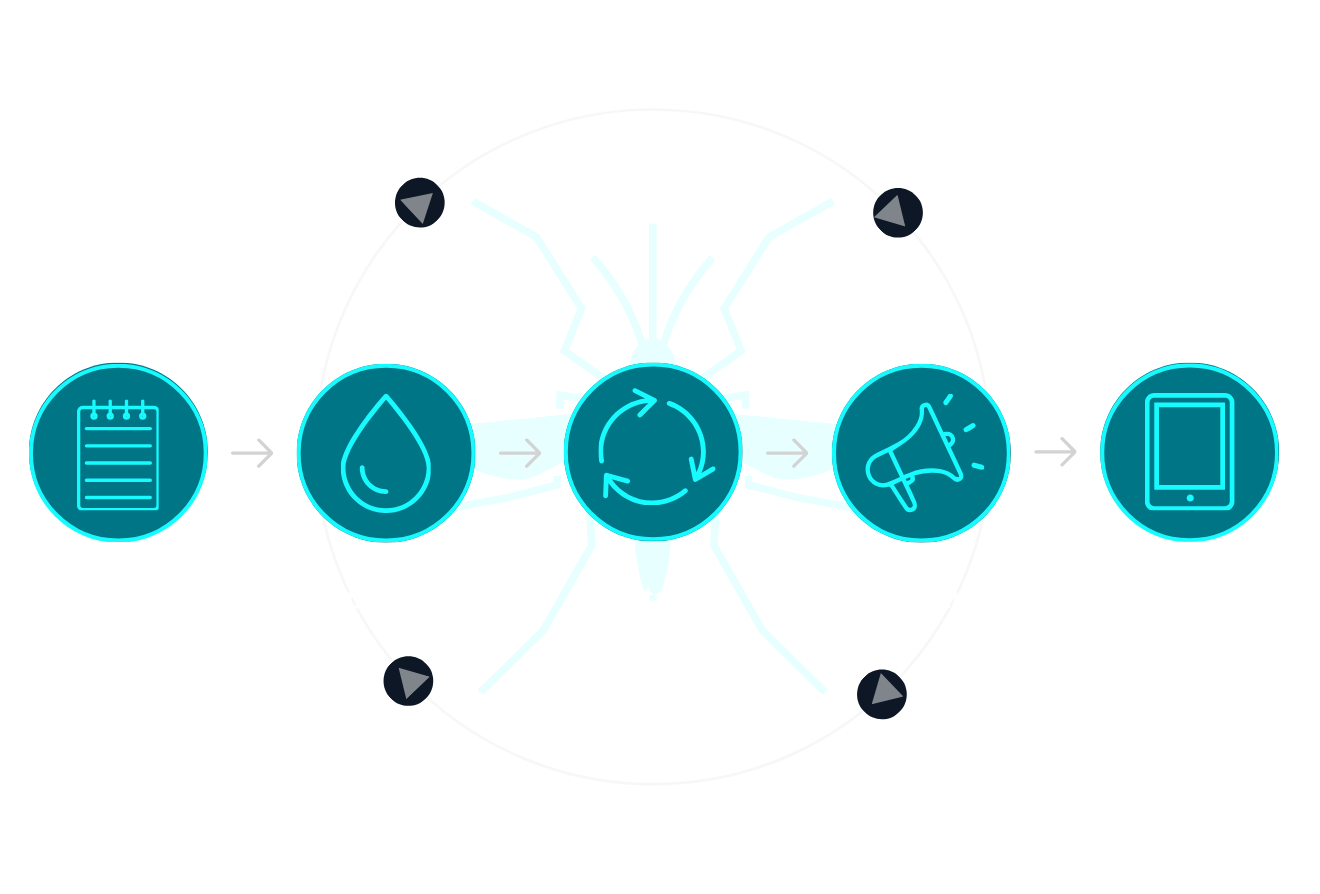
Modern Integrated Mosquito Management (IMM) in the United States is a decision-driven program that incorporates surveillance, public education, habitat source reduction, larval control, and, when appropriate, adult control through the targeted use of adulticides.
Read more about modern mosquito adulticiding in part 4.
Hear From Our
Regional Experts

South Central Region
Gary Ross
There was very little rain across the region in December and January, and we will be heading into drought conditions if we don’t get some rain soon. Except for some nuisance mosquitos along the Gulf coast triggered by high tides, there were very few insecticide applications made. Most districts are in winter mode and are focusing on equipment maintenance and preparation for next season. But the warm weather kept some pest control insects active, especially ants and spiders.

Southeast Region
Mike Riles
The winter has been filled with plenty of meetings across the region. I enjoyed the opportunity to be a co-instructor at the South Carolina Mosquito Control Association Conference and enjoyed attending the North Carolina MVCA Meeting. This has also been the time to start thinking about next season, and there are several conversations being had about the capabilities of liquid applications through Central UAS drones. Product use strategies for varying habitats have also been a topic of frequent conversation.

Western Region
Samer Elkashef
The Oregon mosquito control association held their annual meeting in November, where I had the opportunity to present our Altosid® P35 rice field research from the summer. The presentation generated a good amount of discussion, and I’m looking forward to sharing this research during AMCA in March. I also gave a presentation on Red Imported Fire Ant history and biology during the South San Joaquin training day in Tulare, CA. It was a strong showcase for our work with Central UAS Technologies drones to an audience that was quite interested in this application technology.

Northeast Region
Jenna Mora
Many areas of the northeast were slightly colder than normal in December (2F-6F below average) with some pockets of severe freezing temperatures. Based on reports, this was the coldest December in the last 25 years for the LaGuardia Airport weather station. Though cold, most of the northeast was still under dry conditions as of the beginning of 2026, but additional precipitation is expected later in January. We attended the Northeastern Mosquito Control Association meeting, which was an excellent opportunity to connect with people across the industry and discuss trends in control strategies. It was fun to see the excitement surrounding our IGR poster and mosquito sticker giveaways during the show.

West Central Region
Loren Cunnington
Snowpack in the mountains is essential moisture that ensures drought conditions don’t become problematic throughout summer across the west. Current snowpack in the mountains is historically low. This winter is far from over, but concern is mounting over drought in mountainous states. If the drought persists it may lead to both an intense wildfire season and a problematic arboviral season, but this remains to be seen. As winter continues, excitement continues to build for AMCA in Portland.

Midwest Region
Jeromy Baumbach
The weather across the Midwest has been volatile this winter. December was extremely cold across the region with some substantial snowstorms especially in Minnesota. It was also great connecting with everyone at annual winter conferences in Kansas, Missouri and Iowa. The potential of drone technology is a hot topic across the industry, and these meetings served as a tremendous opportunity to share knowledge and spread the word about the capabilities of Central UAS Technologies. If you are in the mid-central area and have questions about drone use in mosquito control, please give me a call.
What's Your Vision?
We'd love to hear any feedback you had on this edition of Vector Vision, and any suggested topics you'd like to hear covered in future versions.
Share your Vector Vision with us in the form below.