



.png?h=400&iar=0&w=1600&hash=85C131391EEFEE5ACED37695DFD6B02C)




TALKING TICKS WITH DR. ALVARO TOLEDO

Dr. Alvaro Toledo, associate professor of entomology at Rutgers University, discusses all things ticks and the threat they pose to public health now and in the future.
-
How have tick pressure levels evolved in recent years?
Tick surveillance plays a critical role in understanding how tick populations change over time. Although several methods exist for surveying ticks, the most commonly used approach is active surveillance, a technique where researchers collect ticks directly from vegetation by dragging or flagging a flannel cloth across the vegetation. When conducted systematically over multiple years and in consistent locations, this type of surveillance can reveal meaningful trends in tick population density, distribution, and seasonal dynamics. However, comprehensive tick surveillance is resource-intensive and therefore rarely implemented on a broad scale. Most efforts are limited in both space and time, which makes it challenging to track long-term changes in tick abundance with confidence.
Despite these limitations, tick surveillance has proven to be an essential tool for documenting the expanding geographic range of ticks. This is especially true for the blacklegged tick (Ixodes scapularis), which is the primary vector of Lyme disease and is responsible for the majority of tick-borne disease cases in the United States.
In contrast to the sporadic nature of tick surveillance, we have continuous and robust data on human cases of tick-borne diseases. These records consistently show a steady increase in reported cases over time. While some of this rise can be attributed to improvements in diagnostic methods, increased public awareness, and better reporting, the broader consensus is clear: tick populations that pose risks to human health are not only increasing in areas where they are already established but are also expanding into new regions. In many of these newly affected areas, human cases of tick-borne diseases are now being reported for the first time, underscoring the urgency of expanding both surveillance and prevention efforts.
-
What relevant public health threats do ticks pose?
Ticks are small, blood-feeding parasites that can transmit dangerous diseases to both humans and animals while they feed. Not every tick species bites people, and different ticks carry different types of pathogens. For example, Lyme disease, the most common tick-borne illness in the United States, is transmitted specifically by blacklegged ticks, also known as Ixodes scapularis in the East and Midwest, and Ixodes pacificus on the West Coast. These ticks also spread other serious diseases such as anaplasmosis, babesiosis, and the potentially deadly Powassan virus.
Among all tick species, Ixodes scapularis poses the greatest threat to human health in the U.S. Lyme disease alone affects an estimated 500,000 people each year. While it is non-fatal, it can cause long-lasting and debilitating symptoms that disrupt daily life for thousands of Americans.
Other tick species, such as the lone star tick (Amblyomma americanum) and the American dog tick (Dermacentor variabilis), also bite humans frequently and are known to transmit diseases like ehrlichiosis and Rocky Mountain spotted fever. These illnesses are less common than Lyme disease but can become life-threatening if not diagnosed and treated quickly with antibiotics.
-
What particular tick-borne diseases and/or tick species currently present the greatest level of concern?
The tick-borne diseases and tick species posing the greatest level of concern today vary by region but share significant public health impacts. Lyme disease, caused by Borrelia burgdorferi, remains the most common and widely recognized tick-borne illness in North America. The disease affects an estimated 500,000 people annually in the U.S. alone. Although Lyme disease is rarely fatal, it can cause a wide range of symptoms that vary in severity and duration. Early signs often include a characteristic “bull’s-eye” rash, fever, fatigue, headache, and muscle aches. If not diagnosed and treated promptly with antibiotics, the infection can spread to the joints, heart, and nervous system, leading to chronic symptoms such as arthritis or neurological complications such as meningitis and Bell’s palsy. Some patients may develop a condition known as Post-Treatment Lyme Disease Syndrome (PTLDS) that can severely impact quality of life, daily functioning, and mental health for thousands of patients. Public education and awareness are critical, as early detection and prompt antibiotic treatment significantly improve outcomes. Economic costs associated with Lyme disease are also substantial, including healthcare expenses, lost productivity, and long-term disability for affected individuals. Given its widespread impact and growing burden, Lyme disease remains a top priority for surveillance, research, and public health intervention.
-
How do you expect tick-borne illness activity to change over the next five years?
Tick-borne illnesses are expected to increase significantly over time due to the ongoing geographical expansion of various tick species. Among these, the blacklegged tick (Ixodes scapularis), the lone star tick (Amblyomma americanum), and the recently introduced Asian longhorned tick (Haemaphysalis longicornis), native to East Asia, are of particular concern. This expansion is leading to increased risk of exposure for millions of Americans, as these ticks carry pathogens that cause diseases such as Lyme disease, ehrlichiosis, anaplasmosis, and others.
Several biotic and abiotic factors contribute to this expansion. One key biotic factor is the population of white-tailed deer, which serve as primary hosts for adult ticks. As deer populations have rebounded in many regions due to reduced hunting and habitat changes, they provide abundant hosts that enable tick populations to thrive and spread. Additionally, small mammals like mice and birds act as reservoirs for pathogens, helping sustain the transmission cycles of tick-borne diseases.
Abiotic factors also play a crucial role. Climate change, including warmer temperatures and milder winters, extends the active season of ticks, allowing them to survive in previously inhospitable northern regions. This results in a northward shift in tick distribution, exposing new human populations to tick bites and associated diseases. Landscape modifications, such as suburban development, deforestation, and the fragmentation of natural habitats, create edge environments that favor tick survival and increase human-tick interactions. These environments bring humans into closer contact with wildlife and tick habitats, further elevating the risk of tick-borne illnesses.
The introduction of the invasive Asian longhorned tick poses additional challenges. Unlike native ticks, this species can reproduce asexually and establish large populations rapidly. It is also capable of carrying pathogens that may impact both human and animal health, although its full public health impact is still being studied.
-
How important is public education in reducing tick encounters, and what messaging strategies resonate best with communities?
Public education plays a critical role in reducing tick encounters and lowering the risk of tick-borne diseases. Because ticks often thrive in outdoor environments and can go unnoticed, instructing people on practical prevention strategies reduces the risk of tick bites and subsequent disease transmission. Awareness of ticks’ habitats increases the adoption of protective measures, such as wearing long sleeves, tucking pants into socks, using EPA-approved repellents, and performing daily tick checks. Educated communities also tend to engage more in managing their landscapes to minimize tick habitats around homes, and they are more likely to seek prompt medical care if symptoms of tick-borne illness arise, leading to better health outcomes.
Effective public health messaging combines clear, actionable advice with locally relevant information, making the risk more tangible and relatable. Visual aids, such as infographics that show how to perform tick checks and remove ticks properly, can significantly improve understanding and compliance. Storytelling that shares real-life experiences of those affected by tick-borne diseases can further motivate individuals to take prevention seriously. Additionally, reaching communities through diverse channels such as social media, schools, healthcare providers, and outdoor recreational groups ensures a broader and more impactful reach. Addressing common misconceptions, such as the belief that ticks are only found in deep forests or are only active during summer, helps prevent complacency and reinforces awareness year-round.
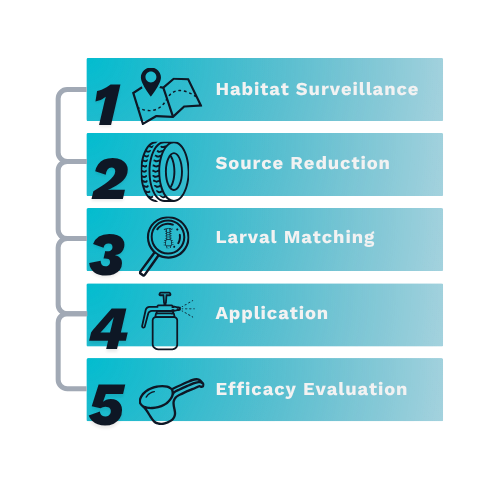
Integrated Pest Management Overview: Part 3
IMM and Habitat-matched Larval Control with Methoprene, Bti, and B. sphaericus
Effective mosquito control programs rely on Integrated Mosquito Management (IMM) as a coordinated approach combining surveillance, habitat modification, biological control, and judicious use of larvicides before mosquitoes emerge as biting adults. Learn more in part 3.
Highlights from Our
Regional Experts

South Central Region
Gary Ross
It was a light summer for mosquito activity across most of the South Central region, with dry, hot conditions prevailing. But the changing seasons could result in a spike in nuisance mosquito activity. Many districts across the area will be focused on tidal marsh mosquito control, as higher tides and flooded marshes can lead to increased mosquito activity. It’s also been exciting to see more districts embrace drone technology as part of their mosquito control efforts. I expect that trend to continue heading into 2026 with both larvicide and ULV drone applications gaining popularity.

Southeast Region
Mike Riles
The consensus around the Southeast region has been that while trap numbers are generally down, transmission rates and West Nile virus cases went up this season. While the numbers haven’t matched last year, where the rates were staggering, they have still been considerable across the Southeast. The potential for a cooler and wetter winter than in years past could result in significant overwintering, which could impact mosquito populations come spring. We also have some exciting trials starting up in the coming months, including a special one that showcases the power of two.

Western Region
Samer Elkashef
Mosquito activity ramped up toward the end of summer, with the Central Valley of California being a consistent hotbed for West Nile virus activity. It will be interesting to see if wet October conditions persist throughout the winter, as that could result in higher mosquito abundance come spring. This summer, we partnered with Coachella Valley Mosquito & Vector Control on a successful Altosid® P-35 trial treating Psorophora spp. mosquitoes in their date fields. In addition, we also partnered with Fresno Westside MAD and Central UAS Technologies to treat about 200 acres of rice with Altosid® P-35. This project was an immense success, delivering approximately 45 days of control.

Northeast Region
Jenna Mora
Similar to summer, it’s been a dry start to fall across the Northeast, resulting in less mosquito larvae and fewer mosquito larviciding missions. However, there have been significant concerns about West Nile virus throughout the region. Surprisingly, there have even been confirmed cases of malaria and locally acquired chikungunya across the region. These vector-borne diseases are not typically transmitted this far north, which brings new challenges to local MADs. In response, many counties have launched extensive outreach programs to raise public awareness and help prevent vector-borne diseases from spreading within their communities. With populations of medically important mosquito species expanding their ranges across the Unites States due to climate change and transport by human activities, it’s important for mosquito abatement districts to stay ahead of this intrusion through the use of strategic Integrated Mosquito Management best practices.

West Central Region
Loren Cunnington
October kicked off tradeshow season with fall and winter meetings in full swing. It was great seeing so many people at the Utah Mosquito Management and Northwest Mosquito & Vector Control Association Conferences. West Nile virus counts in Utah were significant in 2025, despite severe drought across much of the state. This has prompted many districts into investigating why West Nile numbers seem to spike during drought years. In other news, mosquitoes have been found in Iceland for the first time and may be here to stay if they find shelter in basements or barns during the winter. The average temperature in Iceland has increased by 2°F over the last 20 years, which suggests mosquitoes could become more regular on this cold and isolated island territory.

Midwest Region
Jeromy Baumbach
It’s been a warmer fall than usual across most of the Mid-Central Region, with the first hard frosts arriving later than normal. This resulted in extended mosquito activity well beyond the typical season, delaying Culex diapause and sustaining West Nile virus transmission risk, while localized floodwater events triggered Aedes vexans surges. It was also great to connect with so many field professionals at the Nebraska Mosquito and Vector Control Association meeting to share ideas and discuss solutions.
South Walton County Wins Innovation Award
Congratulations to the South Walton County Mosquito Control District for being named the recipient of the Malcolm Gladwell Tipping Point Designation, a prestigious recognition celebrating organizations that “drive bold inflection points within their industries". Determined in part by renowned author and thought leader Malcolm Gladwell, and sponsored by T-Mobile for Business, this award highlights organizations that apply creative, data-driven solutions to complex challenges.
The South Walton County Mosquito Control District (SWMCD) received the distinction for its leading innovation, which included becoming the first in their region to launch a drone-powered mosquito control program. With UAS technology, they can reach breeding sites with pinpoint accuracy, reduce chemical use, and complete treatments in hours instead of days, cutting treatment time by up to 75 percent. The drones also serve as mapping tools, creating high-resolution images of the landscape and helping staff predict where outbreaks might occur.
By combining drones, data, and dependable connectivity, SWMCD has redefined what is possible in mosquito control. They are protecting public health, preserving the environment, and setting a new standard for how small government teams can innovate for their communities. By leveraging advanced aerial systems for real-time data collection and rapid deployment, the district has set a new standard for innovative, technology-driven public health programs.
The award ceremony, held on October 20, 2025, celebrated the district’s achievement and its pioneering approach to protecting public health.


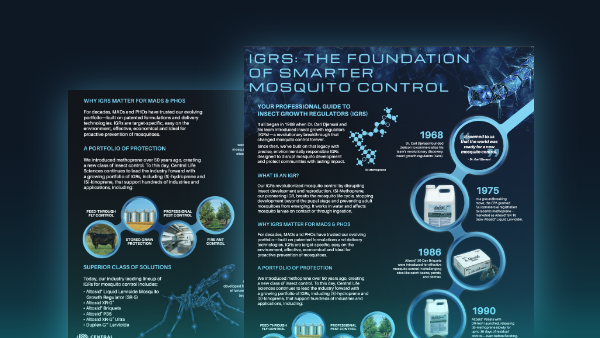
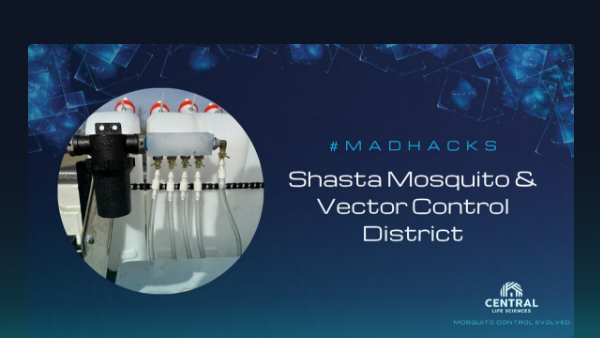
What's Your Vision?
We'd love to hear any feedback you had on this edition of Vector Vision, and any suggested topics you'd like to hear covered in future versions.
Share your Vector Vision with us in the form below.